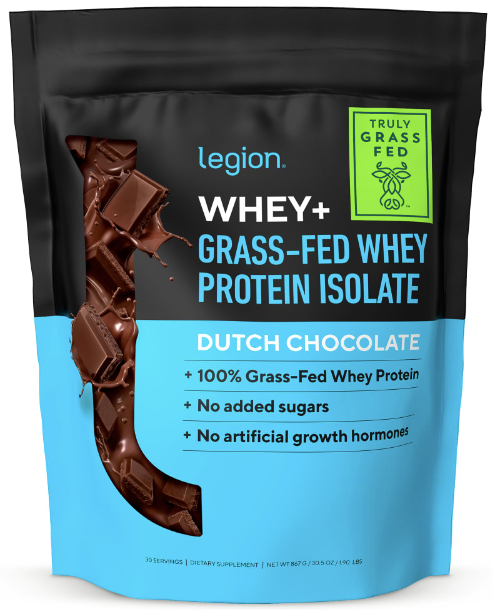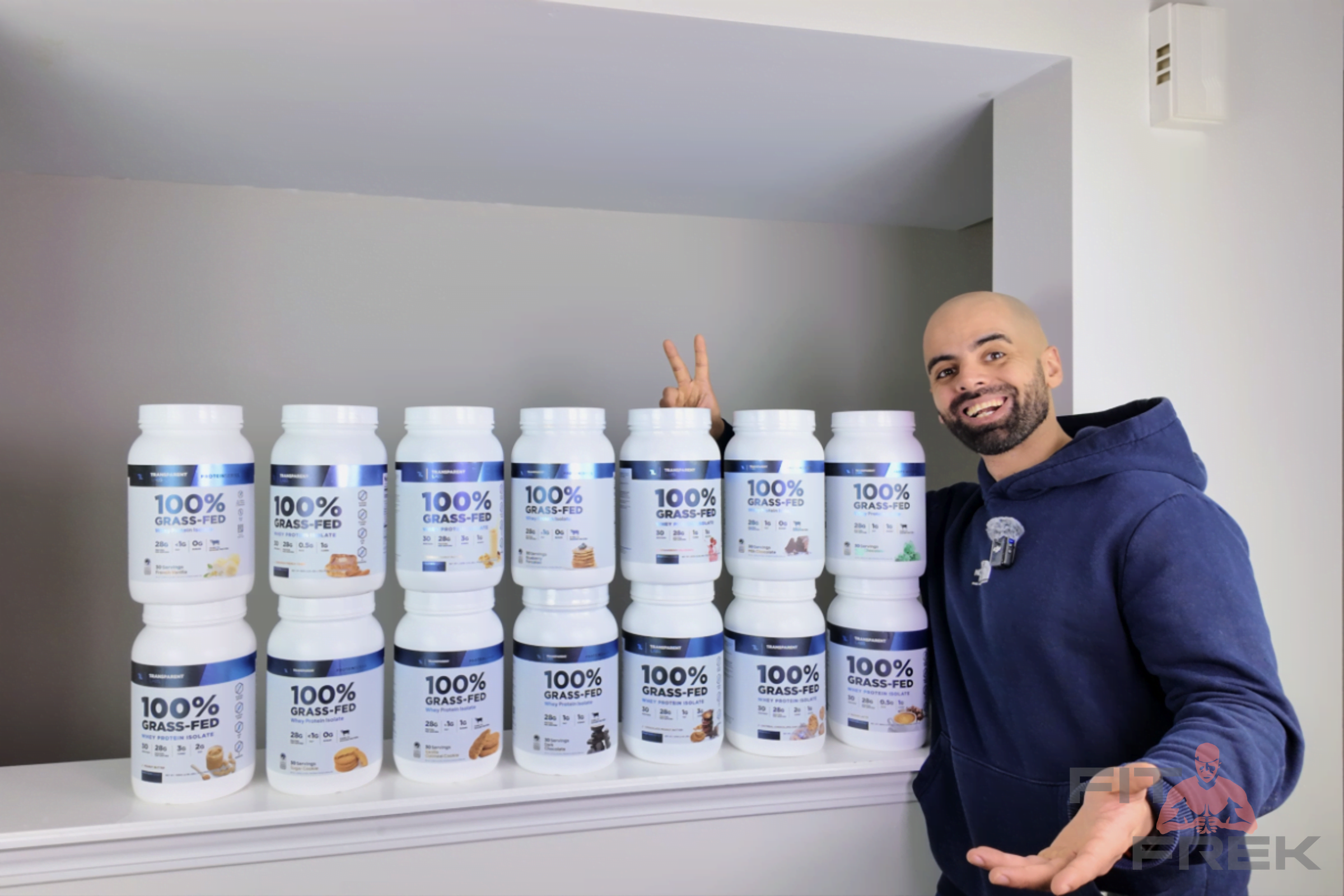
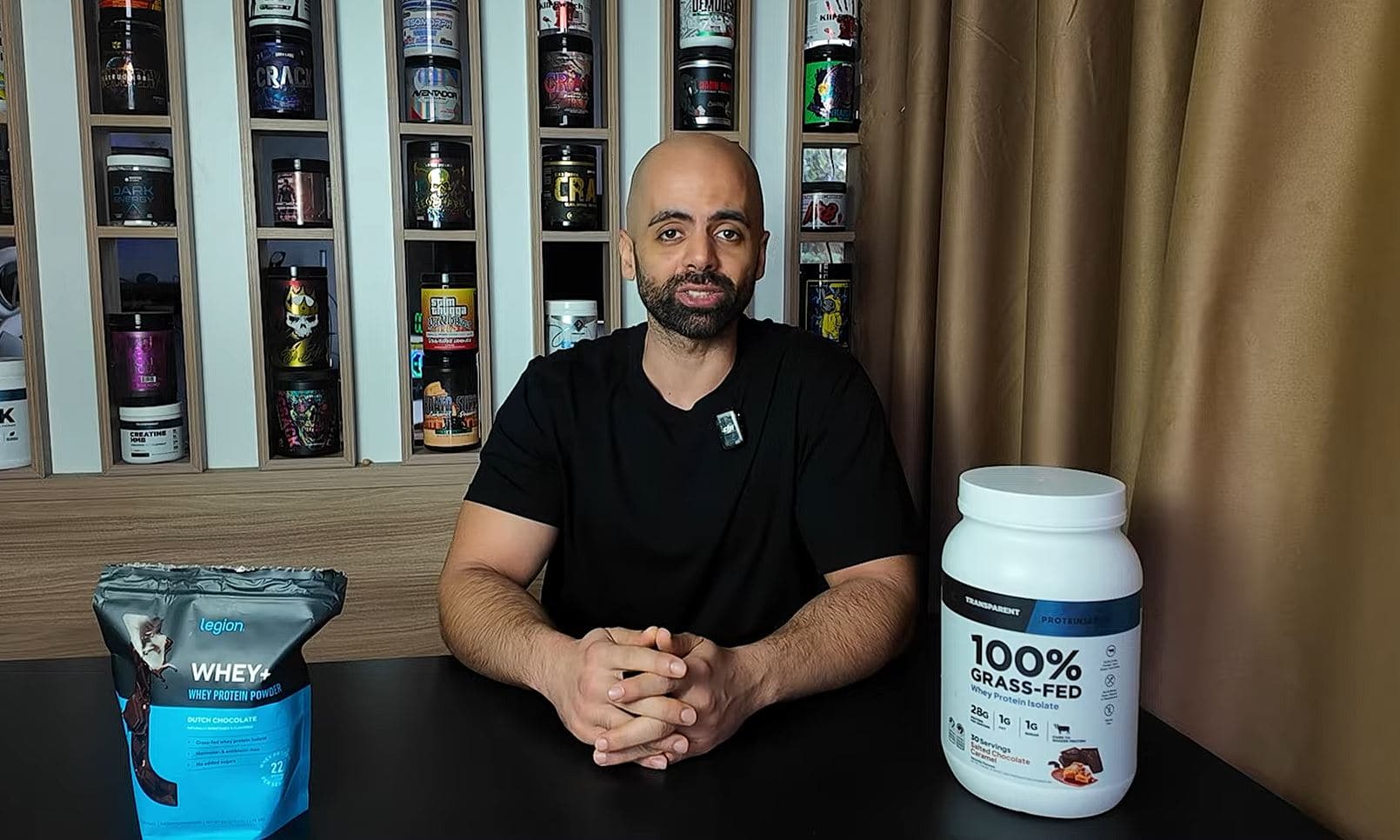
Those are the two flavors in my December 31, 2025 side-by-side video. This article keeps that actual test separate from the nutrition labels on products you can buy later.
Choose the lighter shake when that is what you enjoy drinking; choose the richer one when that texture appeals to you. Do not mistake a thicker shake, a bigger scoop or a shorter ingredient list for a muscle-growth test.
Label note: Historical taste test, published December 31, 2025. These are sensory observations—not current universal nutrition specifications.
The flavors differ, and the portions do not necessarily contain the same powder or protein amount. Those differences limit what I can say about the cause of the texture.
The test supports “this was thicker when I drank it.” It does not support “this one ingredient caused everything I noticed,” or a claim about absorption speed or long-term muscle growth.
TL Chocolate Coconut was noticeably lighter. I could pick out the coconut and chocolate, with a brief stevia note. Its thinner finish was easier for me to keep drinking.
My preference was TL in water. That is a taste preference for these tested flavors. It does not mean Legion’s other flavors are too thick, or that TL always tastes better in milk, recipes or smoothies.
In the original video, I reported 28 g protein and 130 calories for the TL tub, and 22 g protein and 100 calories for the Legion tub. Those are figures reported in the December 2025 review, not verified universal current macros for every flavor.
The full original serving-weight, carbohydrate and fat comparison is not independently verified here. I am not filling those gaps using a different flavor’s label.
For example, the TL Milk Chocolate panel linked in the sources lists 28 g protein and 130 calories per 34.9 g serving. That is a useful named-flavor reference, but Milk Chocolate is not the Chocolate Coconut tub from this test.
A scoop is a portion, not a standard unit shared between brands. Six more grams of protein per scoop can reflect a larger serving; it does not automatically establish higher protein purity or better value.
My earlier video linked Legion’s thickness to maltodextrin and described TL’s thinner texture as a purity advantage. The taste test does not isolate that cause. Different ingredients, flavors and powder amounts can all affect the result.
You can reasonably prefer a shorter ingredient list or avoid a sweetener you dislike. That is different from proving that the other product is adulterated, unhealthy or worse at supporting training.
For an ingredient restriction or allergy, read the exact current flavor label. Do not carry an old ingredient list across every flavor from the same brand.
Legion Dutch Chocolate was thicker; TL Chocolate Coconut had a lighter finish. The test does not establish a protein-purity, digestion-speed or muscle-growth winner.
Cost per 25 g protein = tub price × 25 ÷ (servings per tub × protein per serving).
Use the actual price, serving count and protein amount for the same flavor and tub. Different portion sizes make cost per scoop a weak comparison on its own.
I am not naming a current price winner from the old video’s prices or its total-protein arithmetic. The same goes for first-order codes and subscriptions: compare the offer you can actually use.
For training results, this comparison provides no clinical evidence that one finished powder builds more muscle than the other. Overall protein intake and resistance training matter more than treating unequal scoops as equal doses.
For a practical taste comparison, use the same liquid and volume and prepare each labeled serving. For a comparison at the same protein amount, calculate how much powder supplies that amount from each exact label.
Write down the flavor and serving weight. Otherwise a later reformulation—or a different flavor—can make an old conclusion look more universal than it was.
Use protein powder to fill a dietary protein gap. It does not need to be a larger scoop just because it is taken after training.
Choose the texture you enjoy, then compare the current cost for the same protein amount. That is a more useful decision than calling one brand “pure” and the other “full of fillers.”
FITFREK WEEKLY
Early testing notes, formula changes, and verified supplement price moves — filtered into one useful email.