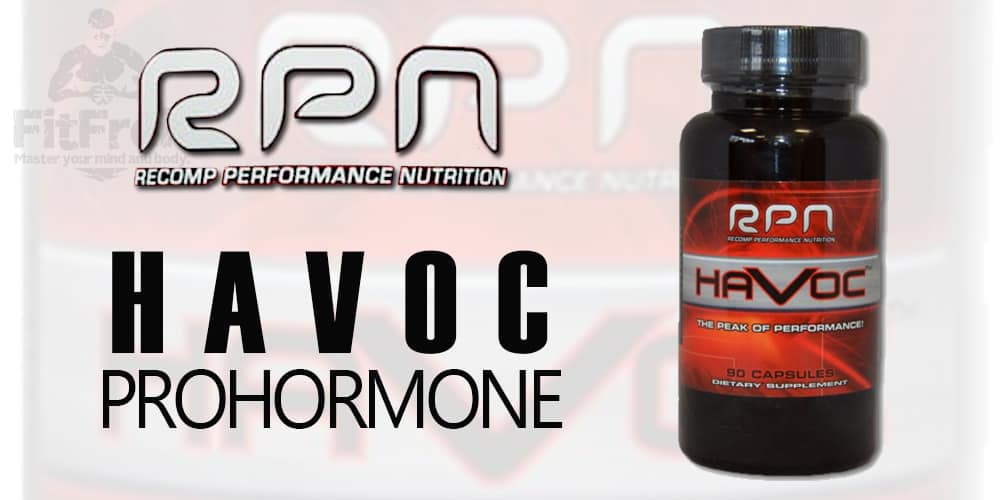
RPN Havoc (Epistane): Effects, Risks and Legal Status
Nader QudimatHistorical & safety explainer Β· Reviewed against federal law and published literature
This is an educational and safety explainer about a historical product. It is not a review, buying guide, or cycle guide. It contains no effectiveness score, price, retailer links, dosing, cycle, stack or PCT instructions. Not medical or legal advice.
Epistane is an orally active anabolic steroid, not a normal dietary supplement. Its chemical identity was added to the federal definition of an anabolic steroid, and published evidence links it to serious cholestatic liver injury. FitFrek does not recommend buying or using anything sold as Havoc or epistane.
Quick verdict
RPN Havoc was sold as a prohormone, but its active compound β epistane β is a 17Ξ±-alkylated anabolic steroid rather than a normal dietary supplement.
Federal law later added the compound to the definition of an anabolic steroid, and published evidence has linked epistane exposure with severe cholestatic liver injury.
Old reports often describe dry-looking gains and low water retention, but those anecdotes don't outweigh the legal, liver and authenticity risks. FitFrek does not recommend purchasing or using products sold as Havoc or epistane.
Historical product data
BrandRecomp Performance Nutrition / RPN
ProductHavoc
Marketed active ingredientEpistane / methylepitiostanol
Chemical synonym2,3-thioepoxy madol
Product category (as marketed)Prohormone
More accurate categoryOrally active designer anabolic steroid
Current statusHistorical / discontinued; current listings can't be assumed authentic
U.S. legal statusAdded to the federal anabolic-steroid definition
FitFrek recommendationDo not use
What was RPN Havoc?
RPN Havoc was a well-known product from the earlier designer-steroid / prohormone era, when compounds like this were sold openly through the supplement market. Its active ingredient was marketed as epistane (methylepitiostanol). Calling it only a "prohormone" understates what it is: the compound behaves as an orally active anabolic steroid, not a mild over-the-counter aid.
Historical anecdotes
Historical anecdotal reporting only β not guaranteed effects, and not an endorsement:
Dryer-looking appearance
Strength increases
Low apparent water retention
Joint dryness
Lethargy
Suppression-related concerns
What the evidence supports
Beyond the anecdotes, the documented picture is a safety one:
Epistane is a 17Ξ±-alkylated oral anabolic steroid. This class of oral anabolic steroids is associated with hepatotoxicity, including cholestatic liver injury.
Published case evidence has reported long-lasting cholestasis following epistane exposure.
A mechanistic study found substantial disturbance of bile-acid regulation associated with exposure.
Liver risk
Documented risk of serious cholestatic liver injury.Β This is not "moderate liver stress." Published cases describe cholestasis β impaired bile flow β that can be severe and long-lasting. Like other 17Ξ±-alkylated oral anabolic steroids, epistane has been associated with hepatotoxicity, including serious cholestatic liver injury.
Legal status
In the United States, federal legislation enacted in December 2014 added epistane's chemical identity to the definition of an anabolic steroid under the Controlled Substances Act. This isn't a vague "ban" β it's a specific U.S. legal classification. Laws differ by country, so the status elsewhere is a separate question, but within the U.S. the compound is treated as an anabolic steroid.
The current authenticity problem
Original RPN stock is historical. Anything currently sold using the "Havoc" or "epistane" name may not represent the original formula β a familiar label or product name does not verify identity, dose or purity. That uncertainty is its own risk on top of the legal and liver concerns, and it's why FitFrek won't provide seller links for this compound.
Final verdict
RPN Havoc remains historically important because it represents the period when designer anabolic steroids were sold through the supplement market.
That history doesn't make it a reasonable modern purchase. The compound's legal status, documented liver risks and the uncertainty around current products outweigh its old reputation for dry gains and strength. FitFrek does not recommend it.

FAQ
Is RPN Havoc a prohormone or a steroid?βΌ
It was marketed as a prohormone, but epistane is more accurately a 17Ξ±-alkylated anabolic steroid. The "prohormone" label understates what the compound is.
What ingredient was in original RPN Havoc?βΌ
Epistane, also called methylepitiostanol (chemical synonym 2,3-thioepoxy madol).
Is epistane legal in the United States?βΌ
Federal legislation enacted in December 2014 added epistane's chemical identity to the anabolic-steroid definition under the Controlled Substances Act.
Why do Havoc products still appear online?βΌ
The name persists in the marketplace, but original RPN stock is historical. Current listings using the name can't be assumed to be the original formula.
Can current Havoc bottles be assumed authentic?βΌ
No. A familiar label or product name does not verify identity, dose or purity.
Is epistane liver toxic?βΌ
Published case evidence documents serious, potentially long-lasting cholestatic liver injury associated with epistane exposure.
Why does FitFrek not list retailers?βΌ
Because we don't recommend the compound and current products can't be verified for identity, dose or purity. Linking sellers would work against the safety conclusion.
Evidence & sources
Designer Anabolic Steroid Control Act of 2014 (H.R.4771)
Epistane, an anabolic steroid used for recreational purposes, causes cholestasis with elevated levels of cholic acid conjugates β Archives of Toxicology Β· 2020