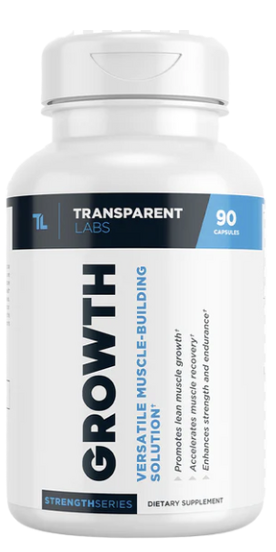
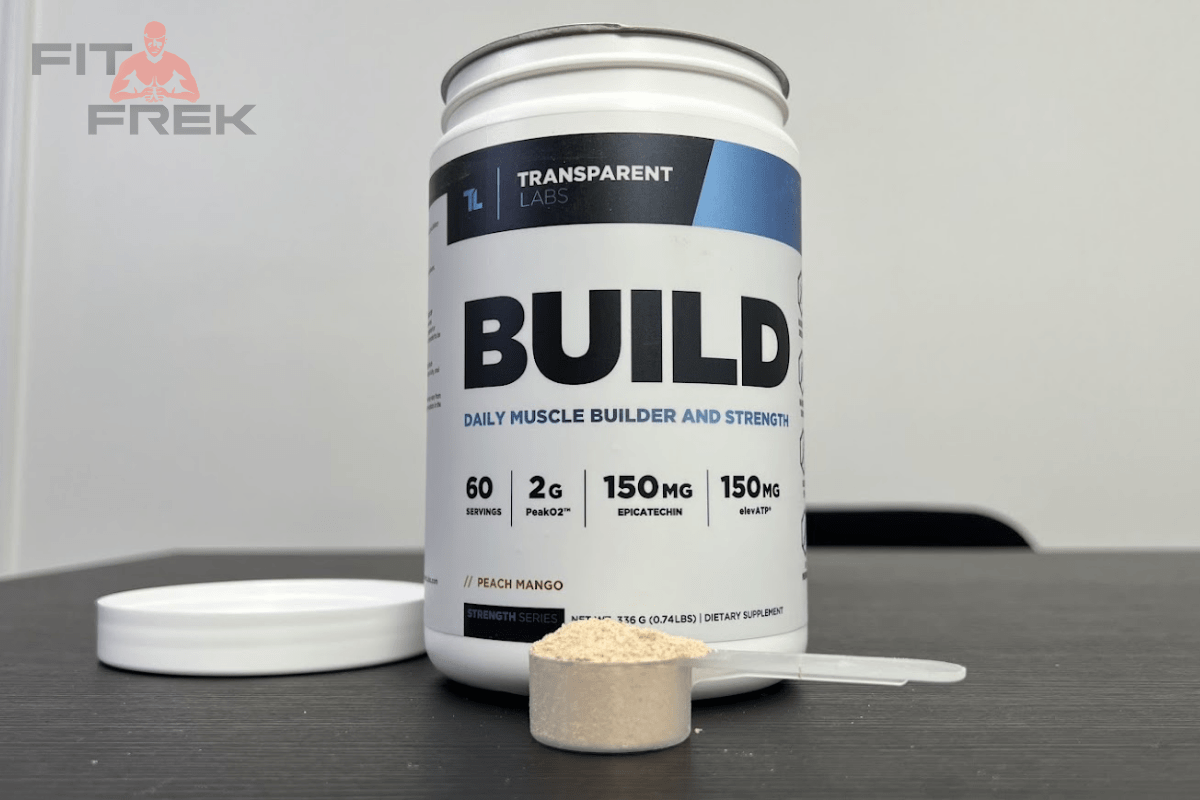
These products are grouped together because both are marketed for muscle growth, but Build and Growth are almost opposites.
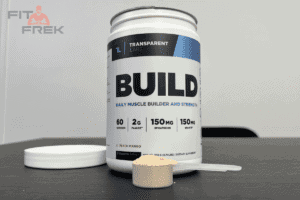
Build gave me effects I could notice during training. Used consistently for more than two months — often during my workout — I experienced stronger pumps and fullness, better endurance, easier recovery between sets and noticeably less next-day soreness. I also felt as though breathing and oxygen uptake held up better during difficult sessions.
Growth was much harder to separate from normal training. I kept my calories and split consistent for eight weeks and watched the logbook closely. My estimated bench strength was essentially unchanged, weighted pull-ups stayed at 65 pounds, and I did not see a clear recovery advantage.
That does not mean phosphatidic acid can never work. It means an mTOR signal is not the same as guaranteed new tissue. Training, nutrition and progression still have to create the conditions for growth.
Build is the product I could actually feel. Growth is the product I wanted to work but could not objectively separate from normal variation. The Build experience video is linked below as a supporting review.
The bench sets look different, but the estimated strength was effectively unchanged within normal day-to-day variation. The week-eight set also occurred at the end of a fatiguing training block.
This does not prove Growth reduced performance. It means the eight-week logbook did not show a clear supplement effect.
Growth concentrates entirely on one proposed long-term muscle-building signal: 750mg of phosphatidic acid from 1,500mg Mediator. That's the whole formula.
Build takes a broader route. PeakO2 targets exercise capacity and oxygen utilization; elevATP targets cellular energy; epicatechin is studied around blood flow and myostatin-related signaling; SenActiv and AstraGin round out the performance and recovery layer. Epicatechin should not be described as definitively "blocking myostatin" — it's better described as an ingredient studied for possible effects on myostatin-related signaling, strength and blood flow, where the human research is limited and context-dependent. Phosphatidic acid is biologically involved in mTOR signaling, and some trials have reported positive outcomes, but the evidence isn't strong enough to portray signaling as guaranteed hypertrophy.
Build is the better purchase for most people. It's a multi-ingredient performance formula that produced noticeable pumps, endurance and between-set recovery across more than two months of use — effects I could actually feel in the gym, without any caffeine.
Growth is an expensive experiment. It concentrates on a single long-term signal — 750mg phosphatidic acid — and across a structured eight-week personal test my logbook didn't show a clear strength or recovery advantage. That doesn't prove it can't work, but it's a subtle-or-absent effect aimed at advanced lifters chasing a possible marginal edge. For everyone else, Build is the more defensible buy, and neither product replaces creatine, protein, calories and progression.
Build — one scoop with 8-10 oz water, 30-60 minutes before training; optional second serving immediately afterward. My preferred use: I found Build more useful during the workout than after it, so I used it as an intra-workout, where the endurance, pumps and between-set recovery were most noticeable.
Growth — one serving daily on an empty stomach, 30-45 minutes before exercise or between meals. The brand recommends testing for at least six weeks; my own test ran eight.
No current retailer offers tracked.